
01.
Consultation
We provide expert consultation from concept to execution, offering structural optimization, cost control, and constructability advice tailored to each project.
02.
Fabrication
We deliver high-precision steel fabrication with advanced equipment, quality control to ensure accuracy, strength, and schedule reliability.
03.
Installation
Our experienced teams manage on-site installation safely and efficiently, ensuring precise assembly, fast progress, and full compliance with standards.
04.
Management
We offer end-to-end project management, coordinating design, production, logistics, and installation to deliver projects on time and within budget.
Fabrication
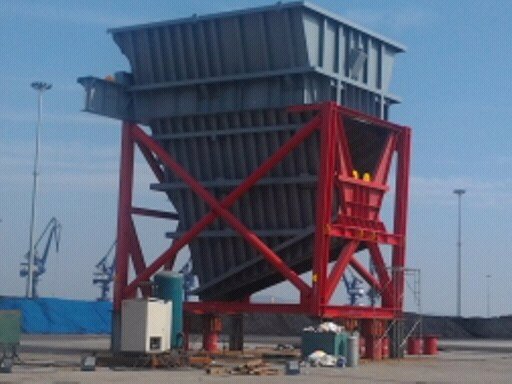
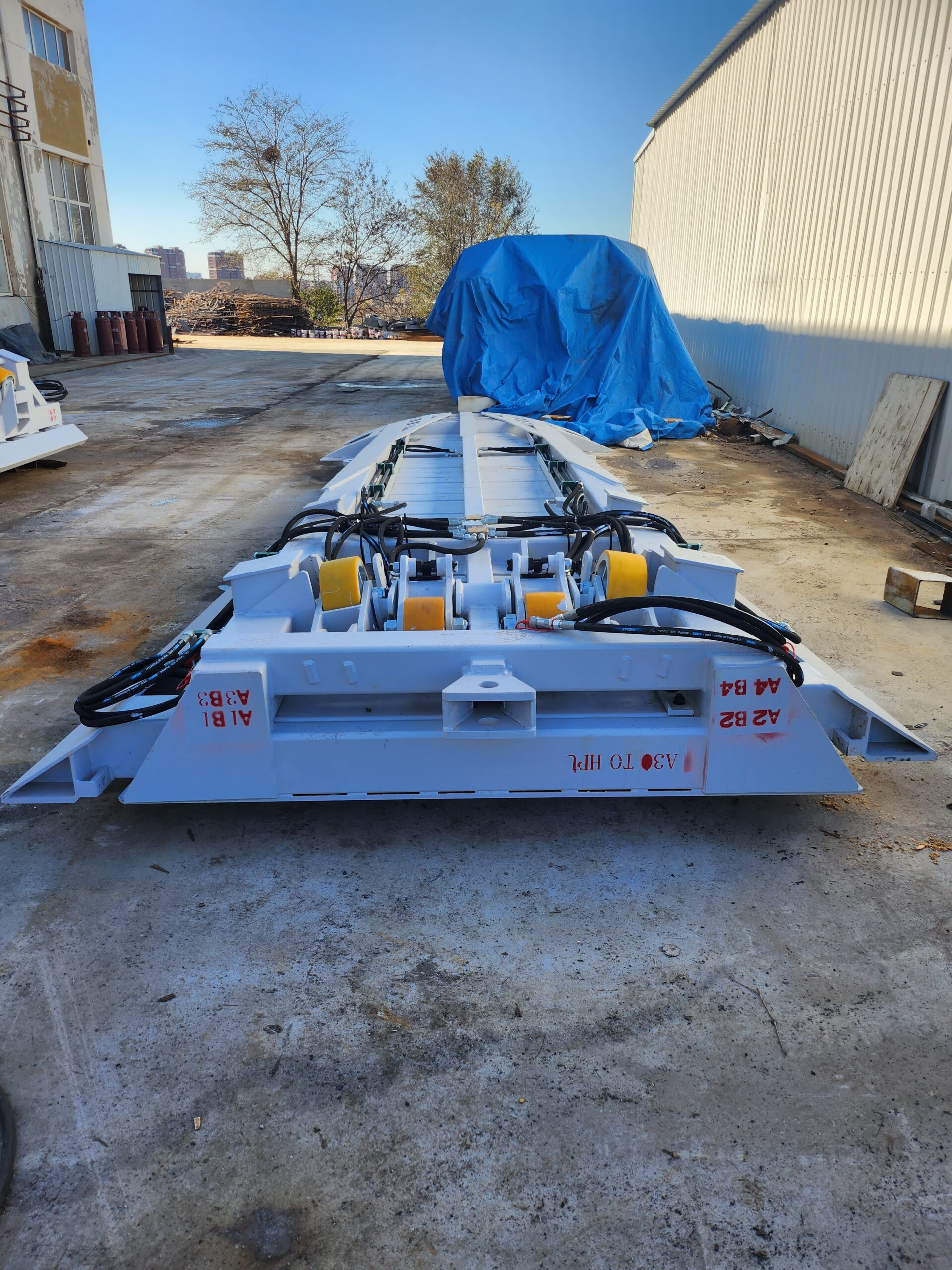
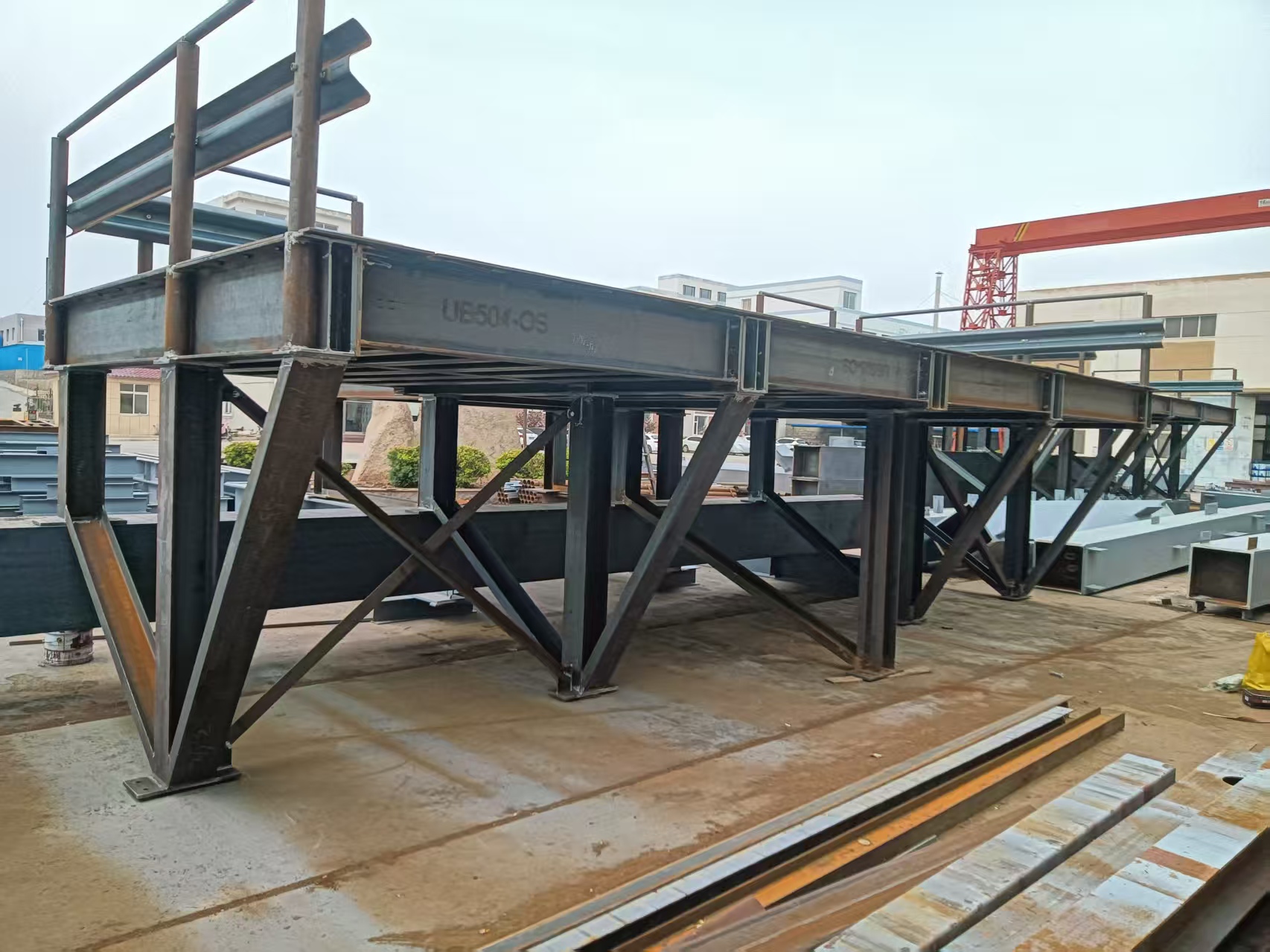
Steel fabrication is the core process of transforming design drawings into high-quality structural components. It includes multiple stages such as material preparation, precision cutting, assembly welding, and finishing protection, emphasizing precise processing and strict quality control. Through CNC programming, non-destructive testing, systematic and standardized management, the accurate dimensions of components, stable welds, and uniform anti-corrosion coatings are ensured, providing solid guarantees for on-site installation. An efficient, rigorous manufacturing process ensures high-quality steel structures and on-time project delivery.
1. Cutting Stage
Drawing Preparation
This step involves further detailing and refining the design outcomes into comprehensive processing drawings, parts drawings, and material specifications based on the construction drawings, serving as the critical interface between design and production. Through systematic drawing preparation, complex three-dimensional structures, node connections, and welding requirements are translated into executable production documents, ensuring that each profile, plate, and bolt is clearly defined in terms of dimensions, identification numbers, and process specifications. Accurate and well-structured drawings guarantee dimensional precision, node clarity, reduced processing deviations, improved assembly accuracy, and minimized rework and material waste. In addition, a complete drawing system provides essential technical support for quality inspection, on-site installation, and long-term maintenance, forming the foundation for an efficient and controlled manufacturing process
Material Entry
This step marks the formal receipt and warehousing of purchased steel and auxiliary materials, signifying the transition of the project into the production phase. Material entry encompasses transportation coordination, unloading, organized storage, quantity verification, specification confirmation, surface quality inspection, and dimensional deviation measurement. Strict inspection procedures ensure compliance with design drawings and applicable standards, establishing a reliable basis for subsequent cutting, processing, and assembly operations. Proper stacking planning and inventory management prevent rusting, deformation, and material loss caused by improper storage. A rigorous material entry process safeguards construction progress, prevents delays due to non-conforming or insufficient materials, and reflects the enterprise’s quality management capability.
Material Inspection (Isolation of Substandard Materials)
This step entails comprehensive quality inspection and performance verification of all incoming materials, directly impacting structural safety and durability. Inspection scope includes chemical composition analysis, mechanical property testing, dimensional accuracy verification, and surface defect examination to ensure that steel, welding material, and accessories comply with design and national standards. Non-conforming materials must be immediately isolated, clearly identified, and fully documented to prevent their entry into production. This procedure protects downstream processing quality, controls production costs, reduces rework risks, and demonstrates a strict quality control system that ensures structural reliability and brand credibility.
CNC Programming
This step converts detailed processing drawings into executable CNC programs using CAD and related software, enabling CNC cutting machines, drilling machines, and machining centers to operate with precision. The program defines cutting paths, sequences, feed rates, cutting angles, and thickness parameters to ensure accuracy and repeatability. Optimized CNC programming enhances material utilization, minimizes cutting deviations and secondary processing risks, improves production efficiency, and shortens the construction schedule. Program optimization also reduces equipment energy consumption and tool wear, extending machine service life. Advanced programming capability reflects technical expertise and forms the core foundation of intelligent and lean manufacturing.
Material Cutting
This step represents a core processing operation involving high-precision segmentation of steel materials according to CNC programs, utilizing flame cutting, plasma cutting, or laser cutting technologies. Cutting quality requires dimensional accuracy, smooth edges, controlled heat-affected zones, and minimal deformation to ensure seamless downstream processing. Strict control of cutting speed, temperature, and path is essential, as cutting quality directly influences assembly precision, welding performance, and final structural integrity. Efficient and precise cutting maximizes material utilization, reduces waste, enhances productivity, and serves as a key indicator of equipment capability and operator expertise.
Beveling
This step involves machining bevels on the cut steel edges to create optimal joint conditions for welding, ensuring complete weld penetration and required mechanical performance. Groove geometry, angle, and dimensions must strictly comply with drawings and process standards to achieve deep fusion while minimizing defects such as porosity, slag inclusion, and welding deformation. Proper bevel design enhances welding efficiency, reduces filler material consumption, and improves joint stability and load-bearing performance. Beveling constitutes a critical technical operation that underpins welding quality and long-term structural reliability.
Deburring
This step removes burrs and residual flash from steel surfaces and edges after cutting or beveling to improve surface quality and processing safety. Unremoved burrs may cause assembly misalignment, welding defects, aesthetic deficiencies, or safety hazards. Grinding tools and specialized equipment are used to ensure smooth and uniform edges, protecting both structural quality and operator safety. Deburring enhances appearance quality and positively impacts subsequent anti-corrosion and painting processes, forming an essential component of refined quality control.
Part Numbering & Identification
This step assigns unique identification numbers to each processed component in accordance with design drawings, ensuring traceability and efficient project management. Standardized numbering improves warehouse management, reduces allocation errors, and supports accurate on-site assembly. Each identifier corresponds to specifications, dimensions, materials, process records, and inspection reports, providing a complete traceability system for maintenance and replacement. This procedure enhances execution efficiency, safeguards construction progress, and reflects modern project management standards.
2. Assembly Stage
Primary Assembly: H-Beam (Assembly, Welding & Straightening)
This step encompasses preliminary assembly, precise welding, and deformation correction of primary load-bearing components within the workshop. Steel beams and columns are positioned according to drawings, secured through high-strength welding, and corrected using hydraulic or mechanical equipment to maintain geometric accuracy and design angles. Straightening is critical to controlling distortion and ensuring structural stability. This phase demands high processing precision, advanced welding techniques, and experienced workmanship, forming the structural foundation for subsequent assembly.
H-Beam Dimensional Inspection
This step involves comprehensive dimensional and geometric verification of assembled H-beam components. Inspection includes length, width, height, flange and web thickness, angular deviation, diagonal measurement, node positioning, and flatness, all in strict compliance with drawings and standards. Precision tools such as laser instruments ensure deviations are promptly corrected. This inspection prevents stress accumulation from forced installation and forms a core element of the project quality management system.
Profile Cutting to Length
This step ensures precise length cutting of steel profiles in accordance with design drawings and on-site installation requirements. Considerations include weld shrinkage allowance and installation tolerances to ensure dimensional accuracy. Proper cutting maximizes material utilization, reduces waste, prevents rework, and enhances installation efficiency.
Marking & Positioning
This step establishes accurate reference lines and installation hole locations on steel components using laser projectors and precision tools. Correct marking minimizes cumulative errors, ensures assembly accuracy, and supports efficient welding and drilling operations. It serves as a foundational quality control measure for high-standard construction.
Secondary Assembly: Small Part Fitting
This step involves systematic fitting of connecting plates, supports, and auxiliary components. Accurate positioning and secure welding or bolting form complete pre-assembled units, improving prefabrication quality and reducing on-site workload and safety risks.
Assembly Inspection
This step conducts a comprehensive inspection of assembled components, verifying dimensions, weld quality, alignment, flatness, verticality, and hole positioning. Using precision instruments, inspectors document findings and correct deviations, ensuring compliance before site delivery. It functions as a critical risk control and quality assurance checkpoint.
3. Welding Stage
Weld Seam Pre-cleaning
This step ensures removal of oxide scale, oil, rust, moisture, and impurities prior to welding through grinding or sandblasting, preventing weld defects and enhancing joint strength and durability.
Welding Preparation
This step confirms welding parameters, equipment condition, and material readiness. It includes parameter calibration, process briefing, and performance testing to ensure optimal welding execution and defect prevention.
Welding
This core operation joins steel components using manual arc welding, submerged arc welding, or gas shielded welding under strictly controlled parameters. High-quality welding ensures structural integrity, load-bearing performance, and seismic resistance, directly determining final product quality.
Weld Seam Inspection
This step verifies weld formation and surface quality through visual and dimensional checks, ensuring compliance and enabling immediate rectification of defects.
Deformation Correction
This step corrects welding-induced distortion using flame or mechanical methods, restoring geometric accuracy and preventing installation complications.
Non-Destructive Testing
This step employs ultrasonic testing, radiographic testing, magnetic particle testing, or penetration testing to detect internal defects without damaging components. Detailed reports support quality documentation and long-term reliability assurance.
Final Dimensional Inspection
This final verification ensures processed and welded components fully comply with design specifications using precision instruments, serving as the ultimate quality control safeguard.
4. Finishing Stage
Slag Removal & Grinding
This step removes welding slag and spatter, smooths surfaces, and prepares components for anti-corrosion treatment, enhancing coating adhesion and surface aesthetics.
Blasting & Rust Removal
High-pressure sandblasting removes rust and contaminants while improving surface roughness for coating adhesion, ensuring long-term corrosion resistance.
Painting: Primer, Intermediate & Topcoat
Multi-layer coating application provides corrosion protection, barrier reinforcement, and weather resistance while enhancing appearance and durability.
Coating Thickness Measurement
This step measures coating thickness using magnetic or eddy current gauges to verify compliance and ensure optimal protective performance.
Visual Inspection (Rework of Defective Products)
A comprehensive visual inspection ensures coating integrity and appearance standards, with immediate rework performed when necessary.
Final Product Numbering
Each qualified component receives a unique identification number with traceable production and inspection records, supporting logistics and digital management.
Finished Product Packing
Components are securely packaged using appropriate protective materials to prevent damage, corrosion, and contamination during transportation and storage.
Shipment Preparation
This step coordinates logistics planning, shipping documentation, batch verification, route arrangement, and site coordination to ensure timely and safe delivery. Efficient shipment preparation guarantees seamless construction integration and demonstrates the professional service capability of XT Steel Structure as a global leading one-stop prefabricated steel structure company.